Lima, Cusco, Mexico City, and Oaxaca, in that order.
I wish I could tell you I made these travel decisions practically. That I followed a set of rules and did some kind of process of elimination to land on the right thing. But the truth is I didn’t. I made every decision based on instinct and an inexplicable feeling of connection.
2 weeks in Peru was my answer to the spiritual vacuum in my heart and visceral desire for gastronomic indulgence.
Back in 2023, I had a Turkish coffee reading that changed my life. That sounds crazy, I know, but it’s true. I was going through a really heavy time in my life, and there was something about the emotional experience that made me feel seen. Ani, my coffee reader, didn’t know anything about me, yet she hit on some points that even those who know me best couldn’t. A lot has stuck with me from that day, but the part that I come back to daily is this: Your gut instinct is really strong; you know what you need. Listen to it. I’ve been prioritizing that ever since; so yes, it literally changed my life.
As a twenty-something year old, I’d dreamed of backpacking across Latin America, hiking the Inca Trail and visiting the wonder of Machupicchu, but life took a turn and that dream was left in a corner to collect dust, forgotten in favor of my career. This time around, I was ready to embrace the journey – nothing else was more important. Except perhaps, food.
I’ve always told people I like to travel with my gut – literally. I make decisions on destinations based on the type of food I’ll get to try and the restaurants I’ll be able to experience. Going into my Sabbatical travels, I needed this to be a connecting thread across every destination, so in that context, it’s no surprise that my destinations ended up being Lima, Mexico City, and Oaxaca – arguably the top 3 food destinations in Latin America. I wanted to feel connected to the culture but I also wanted to eat good food.
Food became a difficult subject for me after I turned 30 in the pressure cooker of the COVID pandemic while experiencing second-hand trauma on an hourly-basis in my job as a School Counselor. It’s a long story, but the punchline is my body no longer tolerates certain foods – my gut just doesn’t have the same capacity to process after years stuck in flight-or-flight. Some days I’m angry about it, other days I’m grateful that, despite undergoing years of medical testing to determine the root cause, at least the outcome is something I can manage with thoughtful consideration, not a sack full of pills. Regardless, my relationship with food was something I needed to repair and this Sabbatical was a great opportunity to do that wholeheartedly.
This travel guide is written as a narrative, but is designed to be used as needed. Jump to different sections based on your needs and interests 🙂
CUSCO
To keep the food from outshining the spiritual journey, I started my trip by heading to the Cusco province to begin my trek to Machupicchu, but it turns out Cusco itself is renowned for their gastronomy! I kept my indulgences to a minimum in case of altitude sickness, but still managed to have a pasta bolognese and white wine that tasted of Florence at Miranda, and a modern take on Lomo Saltado at Morena that I had to finish in one sitting.
On my lone full-day in Cusco, I jumped on a half-day open air bus panoramic tour that conveniently started in Plaza de Armas, just steps away from my hotel. My receptionist had connected me with one of the tour organizers the night before and although the timeline turned out to be a little loose (I was scheduled to start at 8am but we didn’t head out until 9:30am), it was a fun experience regardless. The crowd of tourists I joined hailed from all parts of Latino America and were visibly excited to engage, asking questions at nearly every stop. I was focused on absorbing my surroundings most of the drive, but by the time we arrived at a Quechua-run llana workshop, I was ready to dial in on the moment. We fed llamas and alpacas while we waited for the on-going coca leaf ceremony to end so our guide could take us into the textile shop for a tutorial on the native dying processes. The quality of artesanias was noticeably better than what I’d seen in town and clearly made more of a difference in this community than in el Centro.
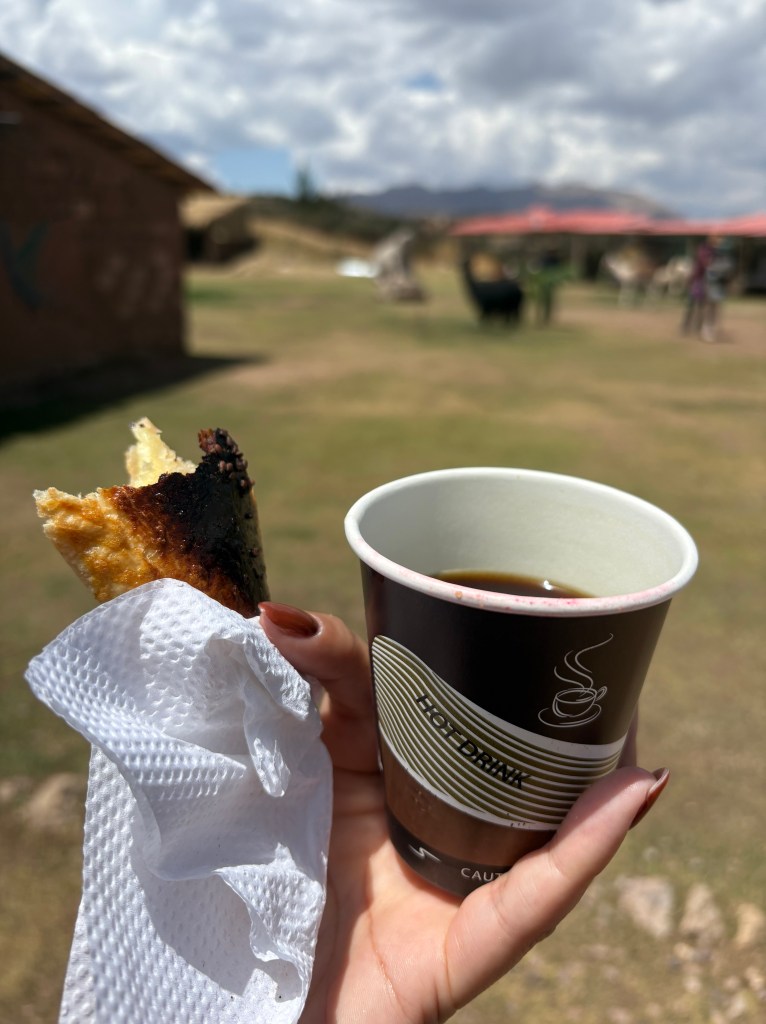
My focus for this part of my travels wasn’t connecting with the indigenous community, otherwise I would have researched more thoughtfully into indigenous-led and owned experiences rather than leaning on hotel staff for recommendations. That being said, my half-day panoramic tour wasn’t too far off the mark. It was led by locals, focused on artisanal merchandise, and shared a glimpse into Quechua traditions that leave a visitor excited to return. It also didn’t hurt that the memory of my unexpected mid-morning snack – an empanada de queso, straight from an outdoor brick oven, and a cafe de olla that managed to balance sweet and spice like none I’ve had before (sorry México, love you) – still lives rent-free in my mind.
If this was what the food tasted like here, I knew Peru was the right choice.
AGUASCALIENTES (OR MACHU PICCHU PUEBLO)
Machupicchu had its own memorable energy, but none of it had to do with food. My arrival in Peru a few days ago had coincided with a labor strike in the area that had derailed thousands of travellers heading up the Andes. By the time I arrived in Cusco, the strike had been resolved but the train companies were still negotiating delays on the track. The day I finally started my trip to Aguascalientes (or Machu Picchu Pueblo), we were met with a long delay at Ollantaytambo station. I wasn’t in a hurry – my ticket into the sanctuary wasn’t until the following morning, but the energy in the room suggested that wasn’t the case for everyone on the trip.
Here’s the thing about travel – there are always unexpected complications, delays, changes, etc. That’s just part of the experience. Even the best laid plans go awry so flexibility is essential. So is planning for potential setbacks. There were several people on the train with tickets to enter the sanctuary that afternoon AND return train tickets to Cusco that night.
Just to clear up what that actually means: Cusco is a 2.5-4 hour train ride from Aguascalientes depending on the time of day. The Machupicchu sanctuary is another 30+ minute bus ride from Aguasclientes. Double that for a round trip and you’re looking at a minimum of 7 hours of travel, not accounting for loading and lines! It’s also worth noting our train out of Cusco left at 10:30am.
Under no circumstances should you plan this tightly. There are countless things that could (and do) go wrong, and the only person losing out is you. For more examples of unexpected travel complications, head back to my Bocas del Toro article about flights and patience.
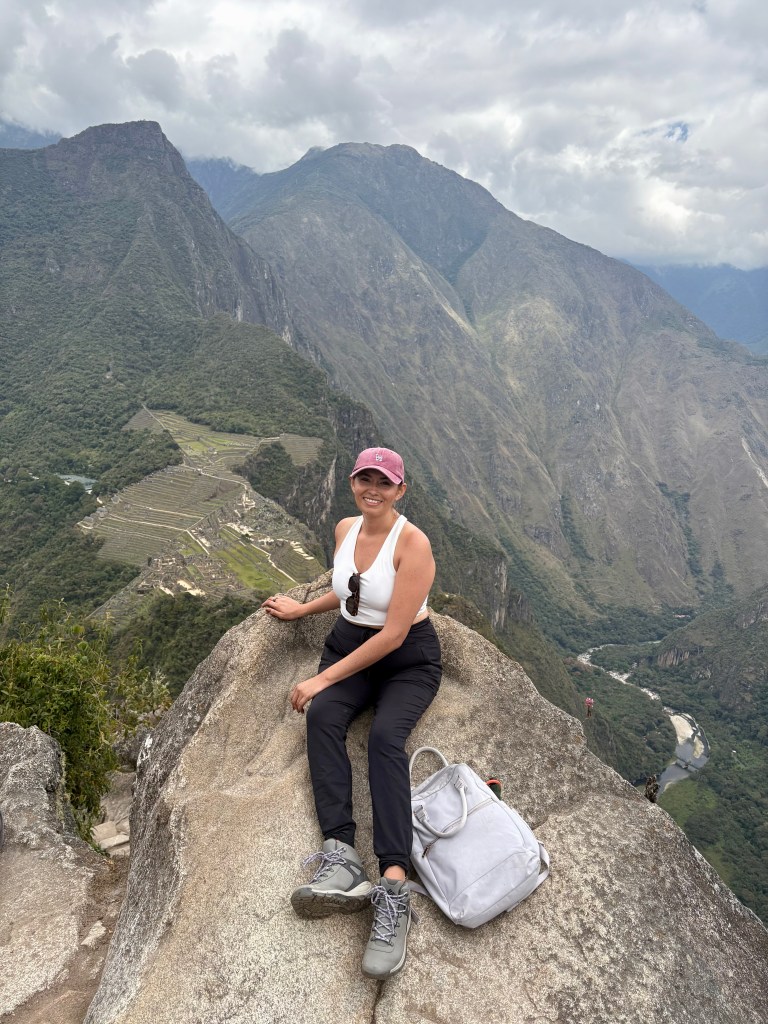
The 2 days I spent in Aguascalientes were perfect. I took the time to enjoy the process and focused on my purpose there – to hike up to the peak of Waynapicchu and see the ancient Incan city in its entirety.
There are 10 different entry circuits to the Machupicchu Sanctuary. Researching the difference between them was a challenge because none of them allowed me to explore the entire space. Many people decide to spend multiple days in the town to give themselves the opportunity to experience multiple circuits. If that’s you, have at it. It’s truly the most practical approach. However, I wasn’t there just for the archeological aspects; I was here because I felt drawn to the place and my gut told me staying more days would dilute my experience. As you’re deciding on the best route, I suggest researching other blogs that breakdown the options. This is one of the most complete ones I’ve come across in my research.
My circuit decision came down to 2 things:
1 – I wanted to hike.
2 – I wanted to see Machupicchu from the best vantage point.
Once I was clear about that, the decision was easy.
I booked Circuito 3 – Machupicchu realeza with entry to Waynapicchu, which would allow me to see the entirety of the sanctuary from my hike. What I didn’t know at the time of booking, and found out very quickly as I started my hike, was that Waynapicchu was lovingly nicknamed the “Stairs of Death”. Para no exagerarte, I stopped at least 3 times to consider the wisdom of continuing, the possibility of turning back, and worry about falling off the side of the mountain if I lost strength in one of my legs at the wrong moment (there are no sturdy guardrails). What kept me going were the multiple septuagenarians hiking steadily past me, sharing encouraging words to keep me moving forward, and mini motivational speeches about the sacredness of the experience on their way back down. Yes, these 70 year olds were not only hiking faster than me, they literally lapped me. There was no way I was going to turn back after that.
They were right though, it was sacred. It was all of the things I knew I needed and all of the things I didn’t. I don’t think it’s like that for everyone. Your experience will depend on where you are in your life at the time and what you’re looking for at the top of that mountain; but for me, reaching that peak – it was like I’d climbed up there with a backpack full of bricks named after all of the survival skills I developed out of trauma that no longer served me, and I came back emptyhanded, ready to start building the path forward (metaphorically).
OLLANTAYTAMBO
If I could replan my itinerary, I would have flipped the order of my stops to visit Ollanta before heading to Aguascalientes (I also would have added a day to Cusco, but I digress).
Ollanta is considered el ultimo pueblo de Inca viviente; the last pueblo where indigenous folks continue to live in original Incan constructions and preserve ancestral cultural traditions. Everywhere you look, you are surrounded by the otherworldliness of everyday Incan constructions that can and should be studied in textbooks and scholarly classrooms everywhere, yet are also somehow an everyday experience for the people in this town. It’s a striking balance to hold both seemingly opposed realities at the same time.
Admittedly, I didn’t get to explore as much as I would have liked. The Stairs of Death left me with a soreness in my legs and thighs that I’d never experienced before. I could barely move for the following 5 days without my legs buckling under me, so there would be no more climbing archaeological marvels for me. Instead I took in the slowness of the town, indulged in too many cafecitos while people watched on the balcony of Sunshine Cafe and later in the Plaza Principal as the tour vans rounded up day-tourists heading back to Cusco.
If you’re thinking of making a stop in Ollanta, consider spending the night. There are 2 archaeological sites worth exploring: the one in Ollantaytambo proper, and the Pinkuylluna Fortress, carved into the side of a mountain and visible from town. Just make sure you’re rested enough to make the hikes.
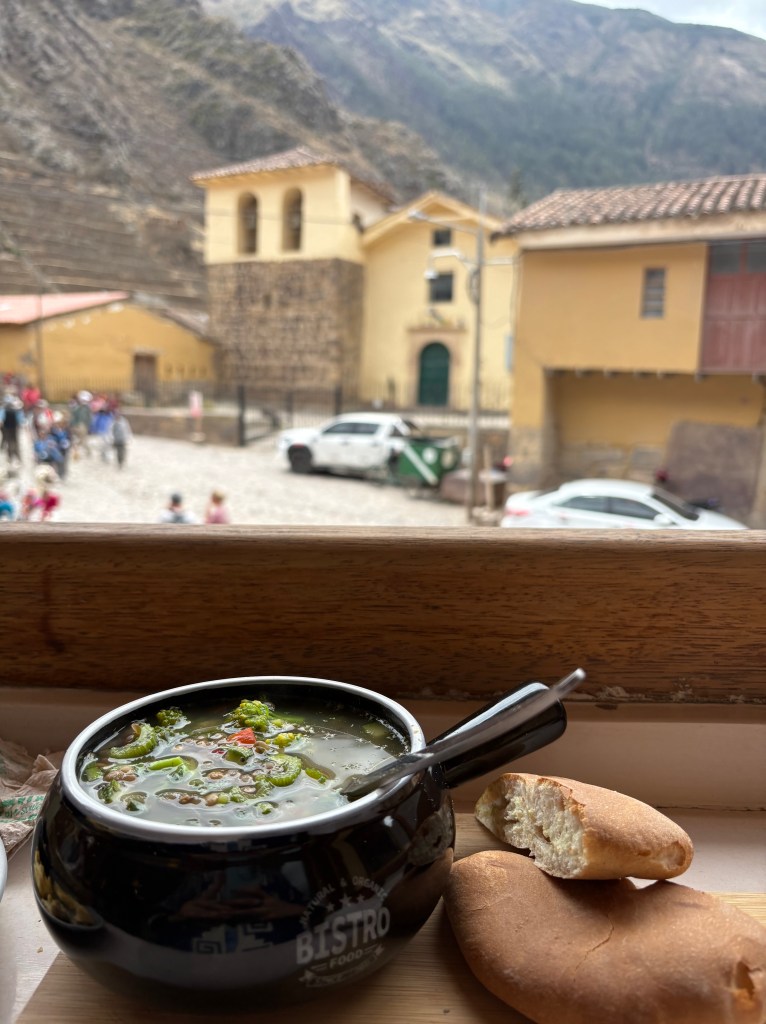
The one culinary experience I want to highlight in this town is Watya – Cocina del Territiorio. With floor to ceiling windows lining the entire place, the colors of the dusk sunset framing the mountainside feels like an integral part of the gastronomic experience. I wouldn’t be surprised if that was all by design. Javier Muñiz, the head chef, is a local with a wealth of experience in some of the best restaurants in the world, from Astrid y Gaston to Maido in Lima to a stint in Dubai – renown for its high-end restaurant scene. He is working to elevate regional cuisine right alongside the best of the best. I had the opportunity to dine there about one month after its initial opening, and although it still had kinks to work though, it was well on its way to making a mark. If you find yourself in this tiny town, give it a try and send me an update! I’d love to hear about the incredible progress they’ve made since my visit.
LIMA
The true star of my Peruvian adventure was the food and if I’m going to talk about food in Peru, I can’t skip Lima.
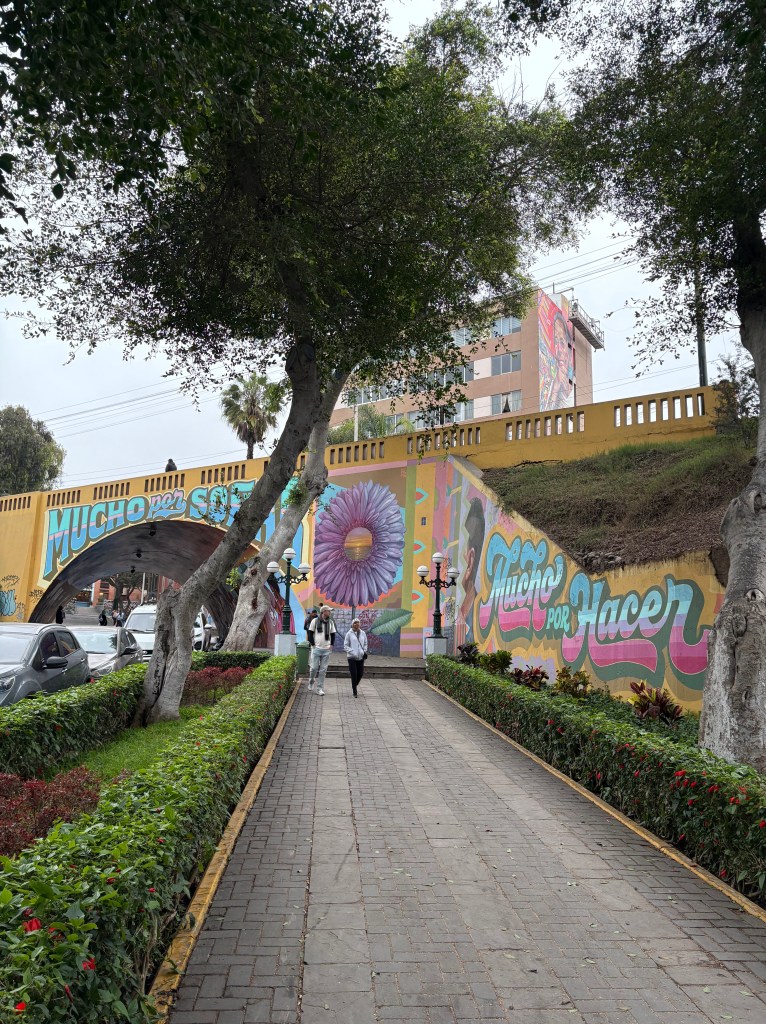
The city itself doesn’t make it into my top 5, but that doesn’t mean it isn’t worth a visit. There is culture visible in pockets like Barranco – a boho chic kind of barrio with politically-driven artwork plastered everywhere you look. The vibe as you walk through the streets is artsy, melding together with puestos de artesanias that seek to blend tradition with modernity. As a person who suffers from severe environmental allergies, my time there was a struggle but if you’re one of the lucky ones to have a healthy respiratory system, I suspect you’ll wish you’d planned to stay longer.
I planned for a full 5 days in the city – significantly longer than I’d stayed in any other up to that point – so that I could indulge in as many restaurants as my stomach could manage. I’m lucky enough to have a friend who identifies as Peruvian-Japanese with deep ties to the restaurant scene across Miraflores and Barranco, so when I decided to visit she was the first one I talked to.
I could write about every single restaurant I visited and explain the complex reasoning behind my choice not to eat every meal out, especially breakfast (short answer: my stomach can’t handle it), but I won’t. The only experience that truly deserves that kind of detail is Maido.
My friend shared a massive list of her favorites, but of course, Maido was at the top. Her brother happens to be the Executive Chef and that alone would have been enough to recommend it, but as luck would have it the restaurant was also named World’s Best Restaurant in the World in June 2025. Despite that, it wasn’t a simple decision to go.
Over the years, I’ve become more comfortable with spending more on an occasional fancy dinner at a highly-rated restaurant, but Maido was on a very different level. Regardless of my current financial situation and the upward mobility I’ve been able to achieve, my body remembers how I grew up: with exactly one pair of shoes and 2 school uniforms to my name, rushing home to change out of the day’s outfit to keep it from getting dirty or torn because I wouldn’t be able to replace it for who knows how long. We had what we needed, no more, no less. If I had not been surrounded by my 2 hype women when the “Worlds Best” news broke, I don’t know if my First gen guilt would have allowed me to give it real consideration, and that would have been a damn shame.
Neikki is a cuisine that fuses Japanese techniques with Peruvian ingredients to make something truly delicious and unique. Maido specializes in it. High-end places like this most often give you a tasting experience (with or without a drink pairing), and less often give you access to a traditional a la carte menu, but Maido has both. Typically, I would have gone the a la carte route, too scared to let the chef surprise me, but this time I let go of control just a little bit and leaned into the experience. It did not disappoint.
From the second I walked though the dark glass doors, I felt like the guest of honor. Everyone knew my name. I was welcomed warmly through every room. And I was escorted everywhere by someone in a dinner jacket. When I say everywhere, I mean everywhere.
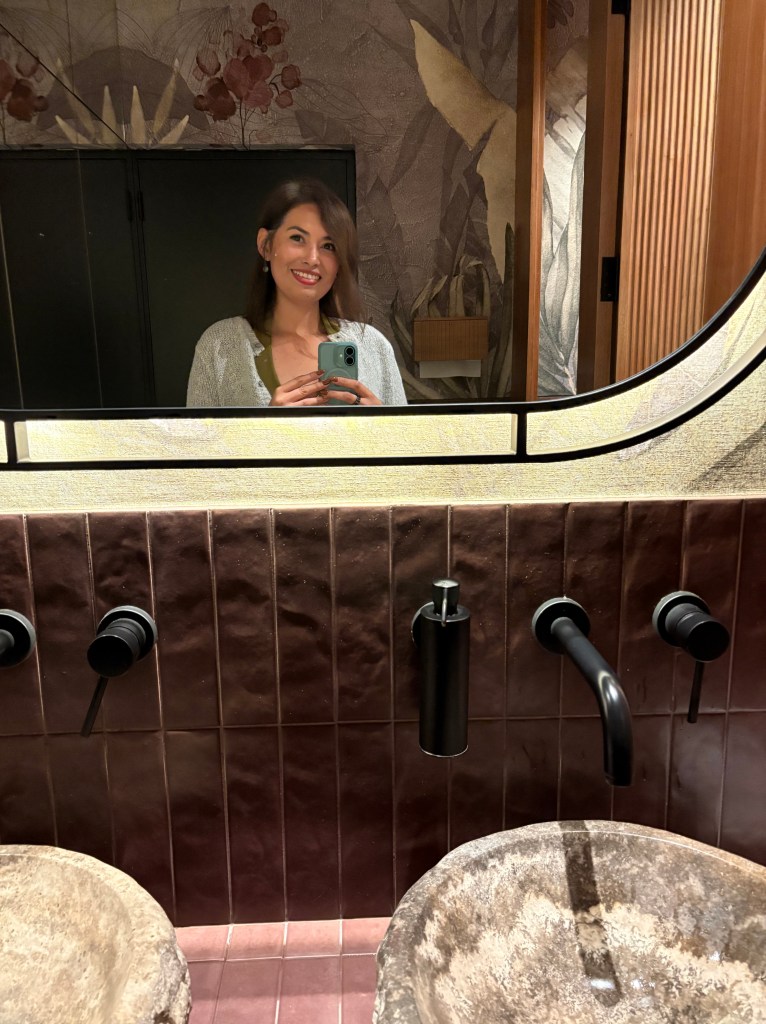
Somewhere between the entree and dessert sections of my menu, I needed to head to the restroom to make room for the remaining courses, and my “experience guide” signaled for an escort who proceeded to pull out my chair, walk me to the foot of the staircase, call someone on his ear piece who was magically waiting at the top of the stairs to escort me on the final stretch of my journey, and closed my door to ensure privacy.
As soon as I was alone, I started laughing hysterically – how did I get here? How is this my life? What is my life!? I’m just a little girl from Santa Ana, suddenly standing in the literal best restaurant in the world, 6 courses into an experience I never dreamed existed. Surreal barely covers it.
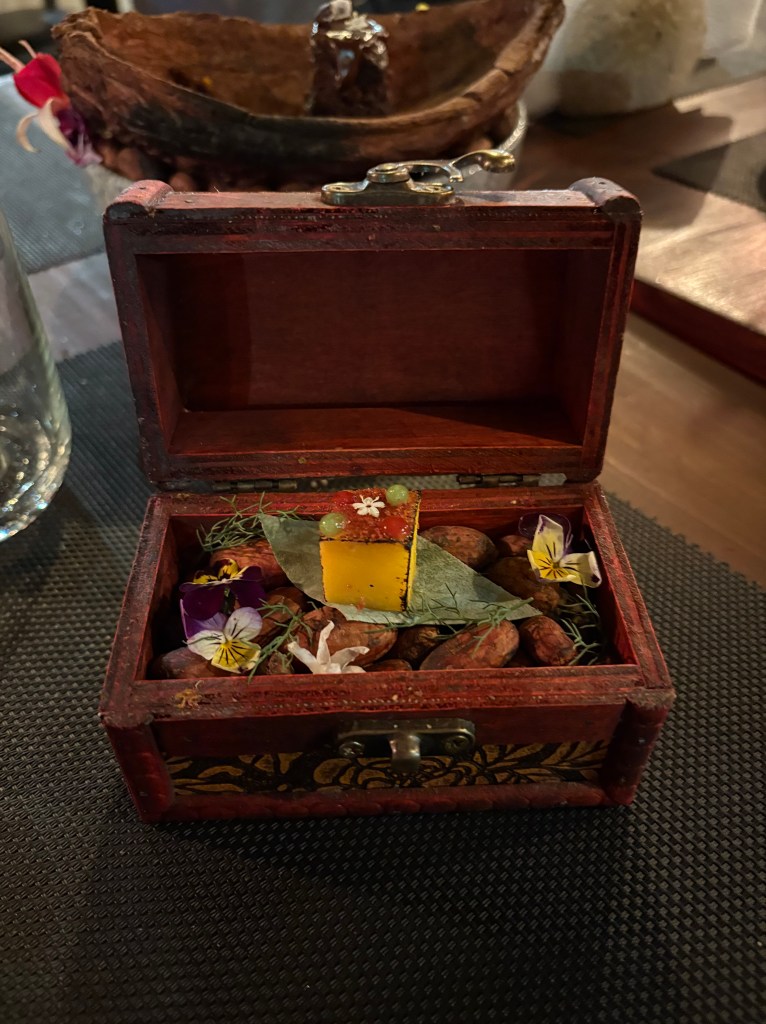
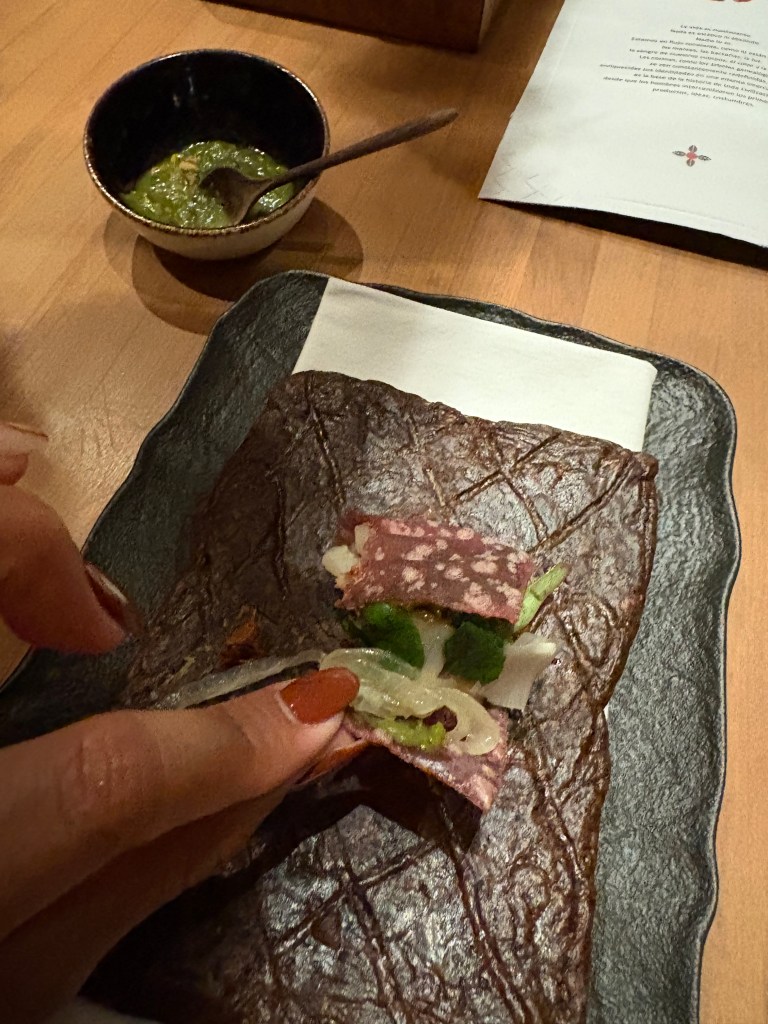
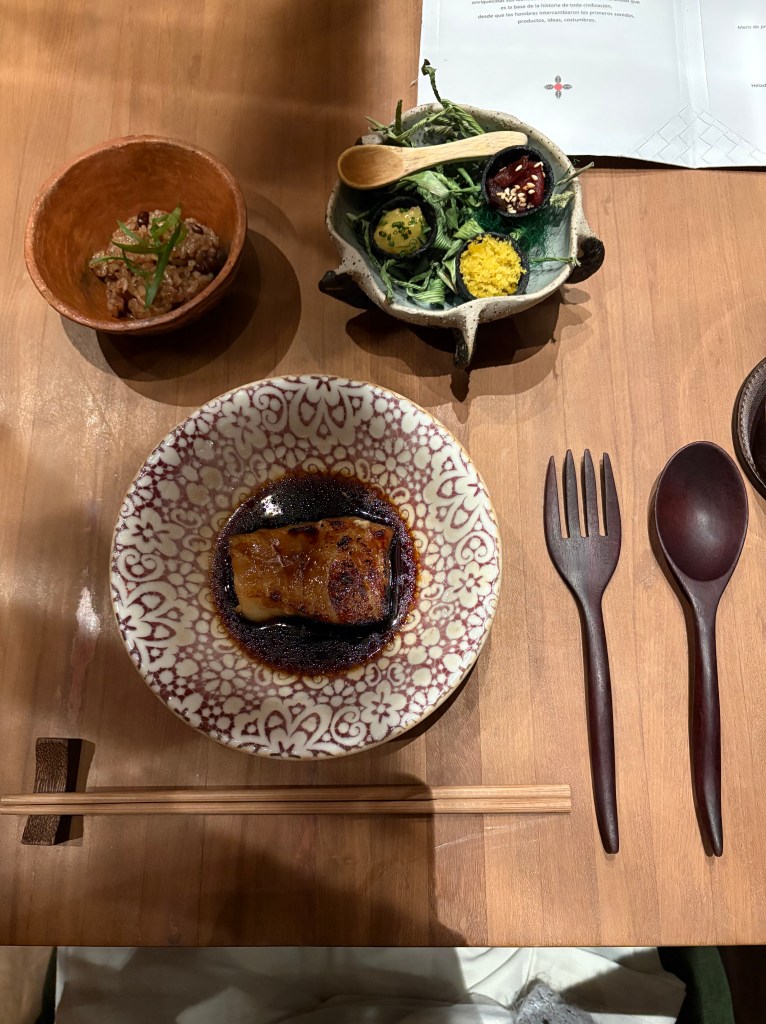
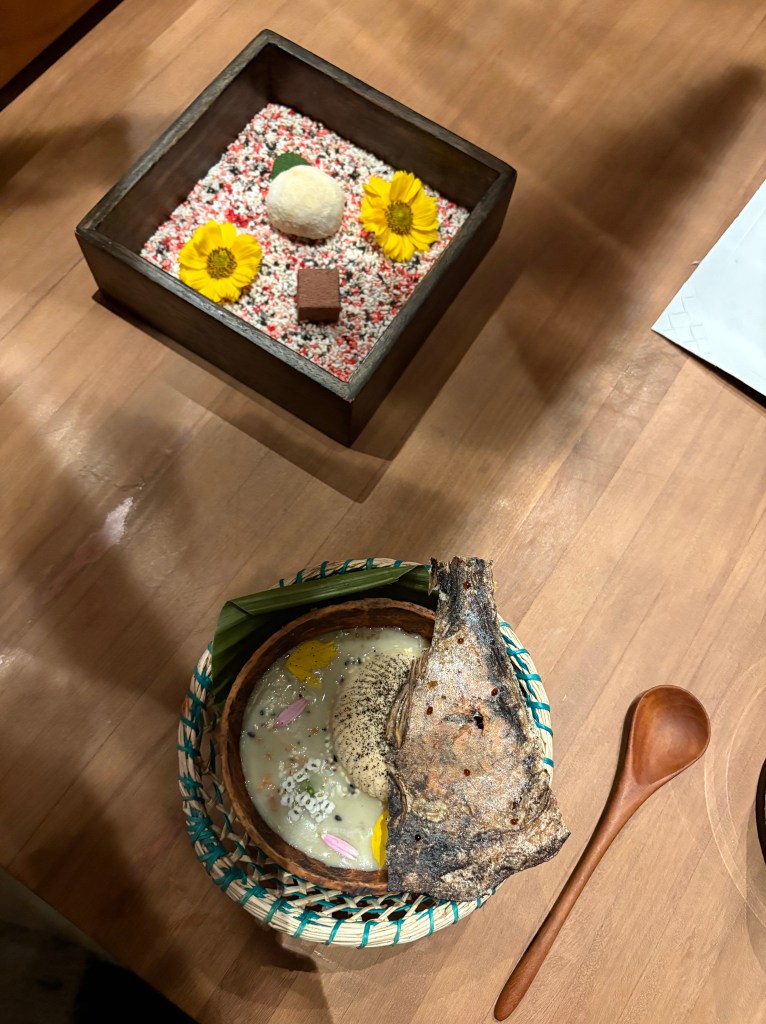
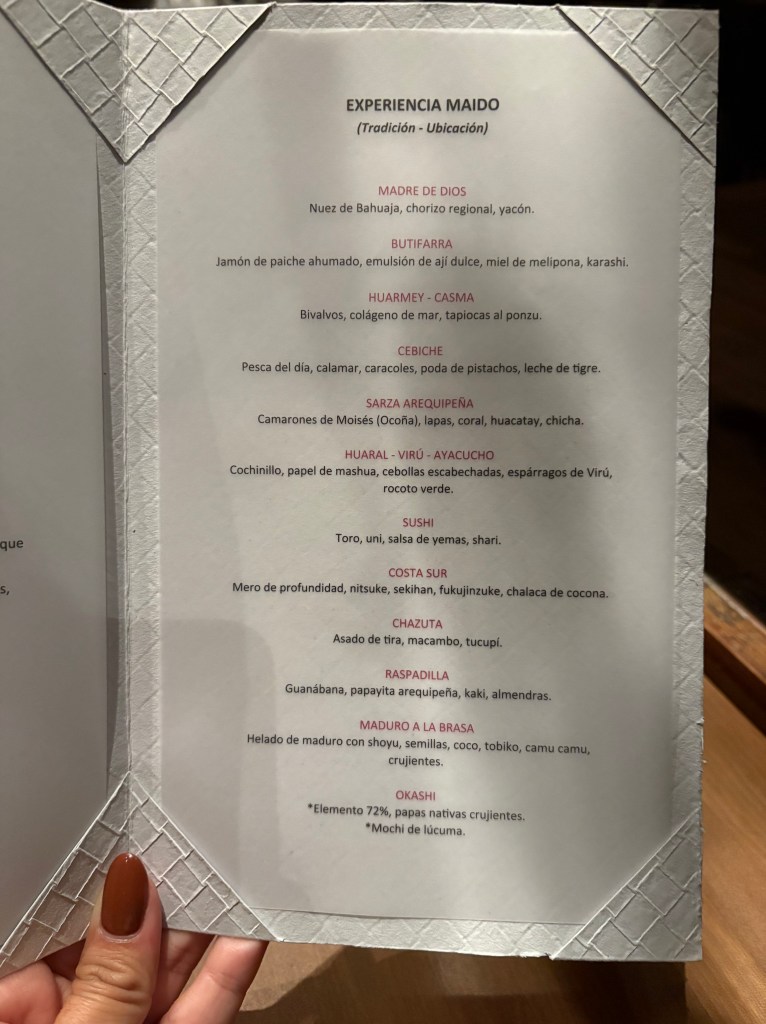
The food itself was exquisite. Morsels filled with umami, tang, sweetness, and something I can only describe as pride in one’s culture. Every course was accompanied by a full explanation of the ingredients carefully selected from different regions across Peru to highlight the full array of flavor this country has to offer.
I’ll add a photo of my menu for that day just for context, but it won’t be the same whenever you have the opportunity to go. The creative-owner chef is constantly innovating and developing new experiences for clients deeply rooted in his culture. Many of the items I tried that night were new to me and things I probably never would have ordered from the a la carte menu if I’d gone that route.
If you get anything from this story I hope it’s this: lean into the unexpected, the unknown. Trust your feelings and intuition to lead. They might land you somewhere unforgettable.
Next time, we’ll dig into my favorite city in the world: La Ciudad de Mexico.
ITINERARY & RECOMMENDATIONS
Below you’ll find my travel itinerary and a list of restaurants I tried and highly recommend for your future visit. I’ve also included suggestions for accommodations and activities based on my experience.
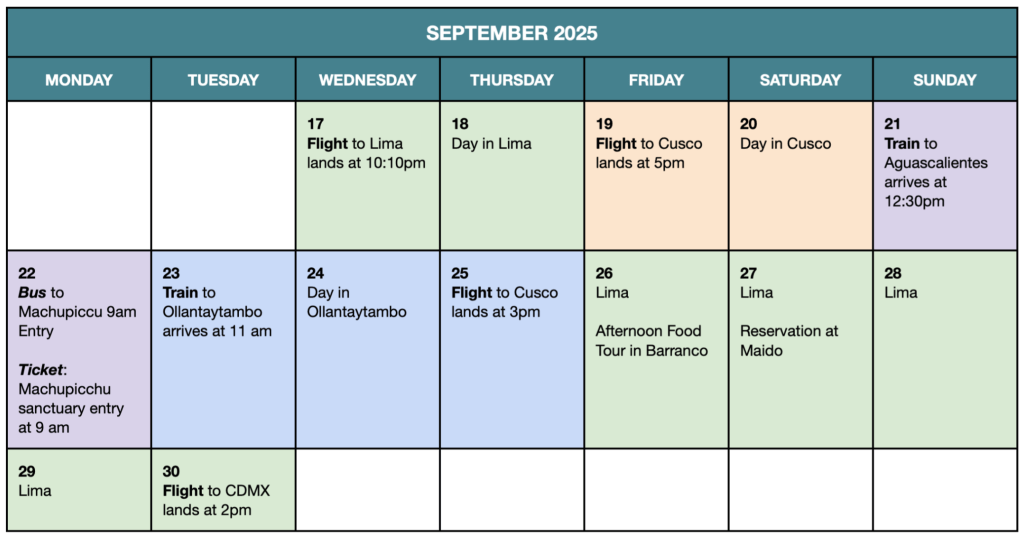
Special note about restaurants in Peru, regardless of the city: if you can book a reservation, do it and book as far in advance as possible.
RESTURANTS
Cusco:
- Carpe Diem or Miranda. CD is the OG, but Miranda is a concept by CD that has a similar menu with slightly less foot traffic than CD. I tried Carpe Diem first and was escorted by the host to Miranda and the vibe was perfect.
- Morena Peruvian Kitchen. The Lomo Saltado Morena was *chef’s kiss*. It melted in my mouth and kept me going back for more. The house salsas were incredible, but could have used a pinch more spice for my taste.
- ACTIVITY: I don’t have a link to this but take the open bus tour that starts in the Plaza de Armas around 9-10 am, trust me. It’s a little bit touristy, but doesn’t feel like a gimmick. Make sure you take small bills in cash for the fresh baked cheese empanadas and cafe de olla. You can book with a tour guide in the Plaza or at your hotel’s reception desk.
- Hotel: Plaza de Armas. Amazing location with a rooftop bar and breakfast buffet with a balcony view of the plaza..
Ollantaytambo:
- Watya – Cocina del Territorio. New experience-driven restaurant elevating traditional Andean cuisine. The chef has done stints in top restaurants in Dubai and Lima, including Maido (named 2025’s Best Restaurant in the World) and Astrid y Gaston.
- Sunshine Cafe. Cute, unassuming cafe above shops with a balcony overlooking the town.
- Hotel: Hotel Tierra Inka Sacred Valley.
- Looks like a compound and is very secure. It’s a few minutes walk down the valley from the main town area which gives you a balance of peace and easy access to the action.
Lima:
- Bodega Dalmacia. Quiet and quaint italian restaurant in Miraflores. Tasty and unpretentious, despite its upscale appearance.
- Pan de la Chola. Small chain of coffee shops in the city. Slightly pretentious but their bread and sandwiches have that outer shell crisp you expect from a little french bakery that specializes in pan, but it’s Latino.
- Isolina (Barranco). I cannot stress this enough: make a reservation. I walked past this place twice on different days and the line wrapped around the building. I finally got smart and scheduled my meal – totally worth it. I had the Papa Rellena.
- República del Pisco. It’s a local chain of restobars but their ceviche with leche de tigre was perfectly tart and creamy.
- Juanito Barranco. The oldest bar in Lima with a full staff of seasoned bartenders serving up classic Pisco Sours.
- Maido. If you’ve been wanting to do a full tasting experience with a top-tier restaurant and aren’t picky about the type of proteins you consume, look no further. Not one of the 12 courses was a let down. Worth every penny.
- Honorable mention: Astrid y Gaston. The only restaurant on the list I didn’t personally try because I couldn’t get a reservation in time. I tried to make up for it by going to Pancita (also by the same owners) but it wasn’t the same. My only regret.
- Airbnb: I like to stay in apartments whenever I’m traveling for more than a weekend for more comfort and flexibility. This Miraflores apartment was BEAUTIFUL and conveniently located. There is a 24/7 doorman and a well stocked grocery store just across the way. Beware the noise pollution is noticeable, even on the 18th floor.
ACTIVITIES/BOOKINGS (mentioned above)
- Train Cusco to Ollantaytambo/Aguascalientes: I traveled with Peru Rail on the vistadome but you can also check out Inca Rail.
- Do your best to travel light. Anything more than 1 carry-on and personal item, and you’ll end up paying $50 to check your suitcase both ways.
- Machupicchu Sanctuary Entry Tickets: Sold by the Peruvian government on this site. Visitors per day are limited so book as soon as you have a timeline.
- Bus to Machupicchu: You can purchase this ticket at Consettur (the only bus line available) the night before your entry to the sanctuary or book in advance online.
- Note: They have limited numbers online but can accommodate more in person so don’t be discouraged if the online portal is sold out.
- Sitio Archiologico de Ollantaytambo: need a Cusco Turistic Ticket which will also give you entry to sites like Qorikancha, Morey, and Pisca for the same price.
- Pinkuyllua Fortress in Ollantaytambo: Free entry. Here’s one of the better guides I came across on getting to Pinkuylluna.
- Barranco Walking Food Tour: This is pricey, BUT you hit all the must-try dishes in great restaurants. I loved my guide. The tour was in English but as a Spanish-speaking Latina I get to use my privilege to ask more indepth questions outside of the regularly scheduled program which enhances the experience.
BONUS: Walking Tour of the Historic Center of Lima! I had a one-day layover in Lima on arrival and used the time to explore a less popular, but historic area of the city. My tour guide, Leo, was phenomenal. If you’re more of a history/political buff, I’d recommend setting aside a half-day for this.
 Storytelling con Marissa
Leave a comment